Reading the three numbers inside a temple arm, and buying sunglasses that fit
Lens width, bridge, temple length: the notation engraved inside almost every frame, what each number does on a face, and how to use the pair you already own to size the next one.

The little line inside the temple arm
Look at the inside of a temple arm next time you have a pair on the desk. There is usually a string of small numbers stamped or printed there that most people never read. The line can be faint. On some older plastic frames it wears off entirely. We print these numbers on our cards where the product data carries them, and we leave the line blank where it does not.
Those three numbers are the shorthand for how the frame will sit on your face. Lens width is the first figure, then the bridge width after a small square, then the temple length. Occasionally a fourth figure appears for lens height, and sometimes a total frame width is given across the front. Find the pair you already wear and follow that engraving. If the engraving has gone, measure the lens across its widest point with a ruler. Hold the ruler steady against the front and measure in millimetres.
Keeping the current pair as your baseline simplifies everything. Try a new frame within a few millimetres of the lens width you like and it will feel familiar. Move ten millimetres away and the object changes in character. A single measurement is not the whole story, but it is where to begin. Make a note of the three numbers, write them down, take a photo. Bring that reference into the fitting process rather than shopping on instinct alone.
The number that decides how it reads: lens width
Lens width is the horizontal width of one lens. This is the measurement that most directly controls how the frame reads across your face. A lens width close to what you already own will give the same visual scale and balance. A change of about three millimetres will feel much the same. A change of ten millimetres will feel like a different object altogether.
Lens width also sets the stage for how a shape behaves. Narrow lenses tend to sit more contained and can look neat on a face that already feels tidy. Wide lenses assert themselves. The range in our catalogue runs from 48 to 69 millimetres, so there is room to move deliberately small or purposely large. The Round Steampunk Polarized Sunglasses MTS2 sits at the narrow end with a 48 millimetre lens. A very different presence comes from the Oversized Retro Square Clear-Lens Glasses, which carry the widest lens at 69 millimetres.
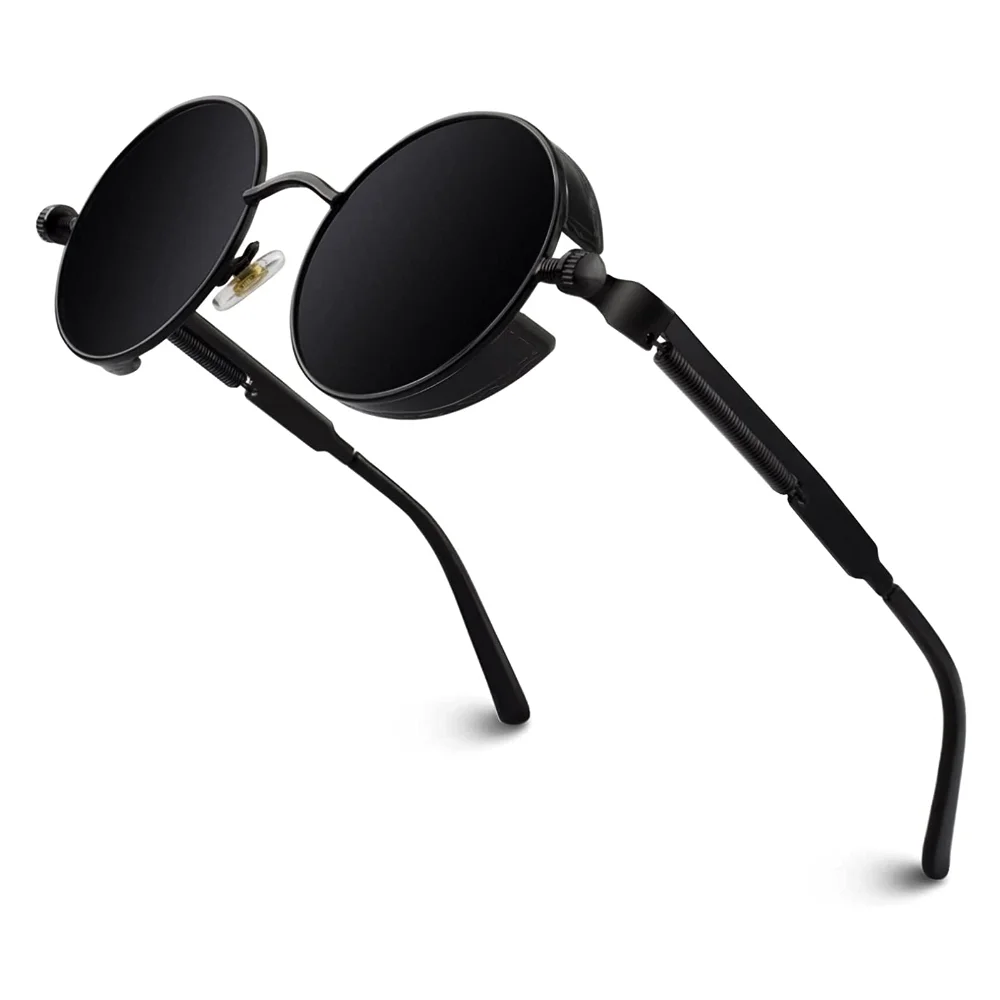
GQUEEN Round Steampunk Polarized Sunglasses MTS2
Polarized, UV400 · Lens 48 mm wide · Metal alloy frame
$14.98
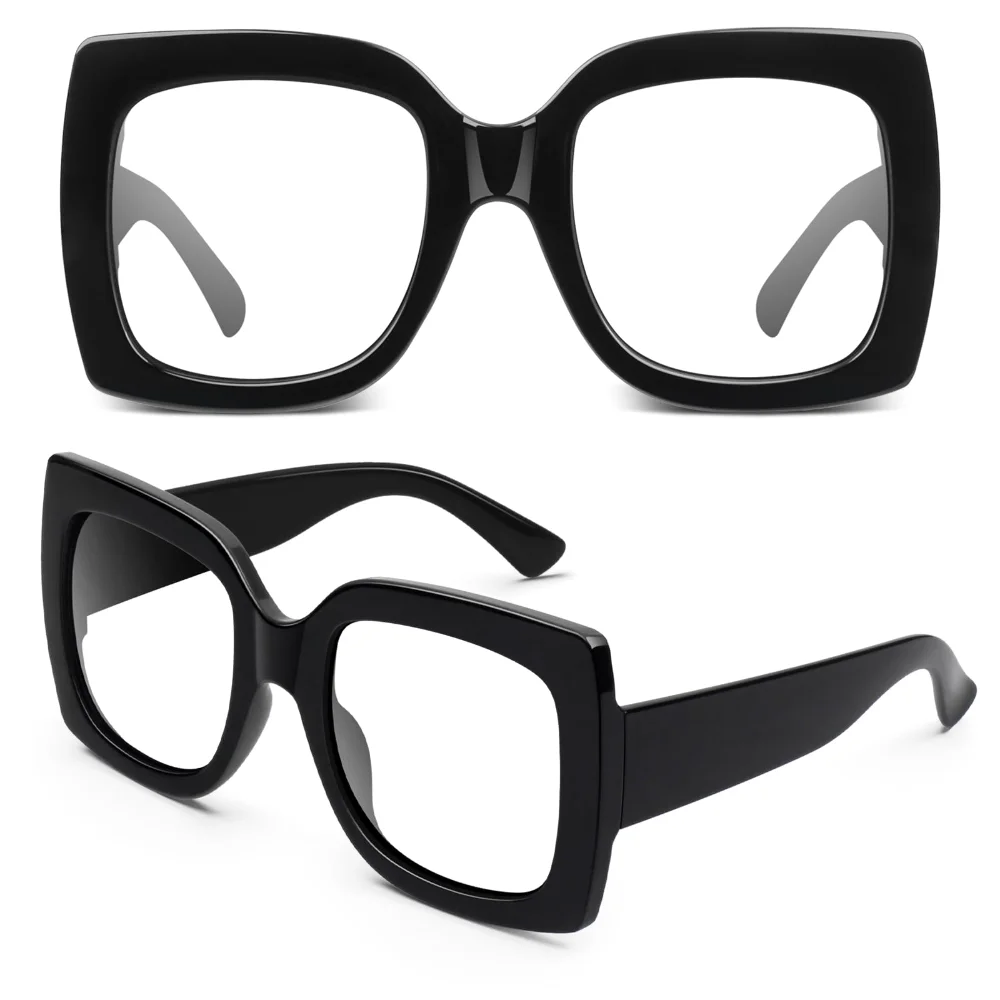
GQUEEN Oversized Retro Square Clear-Lens Glasses
UV400, not polarized · Lens 69 mm wide · Polycarbonate frame
$9.99
Lens width is the number that decides how the frame reads on your face.
The number that decides how it sits: the bridge
The bridge number is the gap between the two lenses at the nose. It governs whether a frame rides up or slides down. Too narrow and the frame pushes up the nose. Too wide and it moves down during normal activity. The effect is immediate and hard to disguise with styling alone.
Material and construction change the bridge’s impact. Metal frames on wire arms usually have adjustable nose pads. Those pads give you the ability to tweak how the frame sits, so a bridge that is slightly off will not ruin the fit. Moulded plastic frames with one-piece pads do not offer that forgiveness. On those you need the bridge number to be right from the start.
The GQUEEN Classic Pilot Polarized Sunglasses MOS1, made from an aluminium-magnesium alloy, carries adjustable silicone nose pads and a bridge of 20 millimetres. Those pads let the frame settle into a comfortable position even if the bridge number is not an exact match to your current pair. The spring hinges on MOS1 also help the arms adapt to the sides of the head rather than forcing the bridge to do all the work.
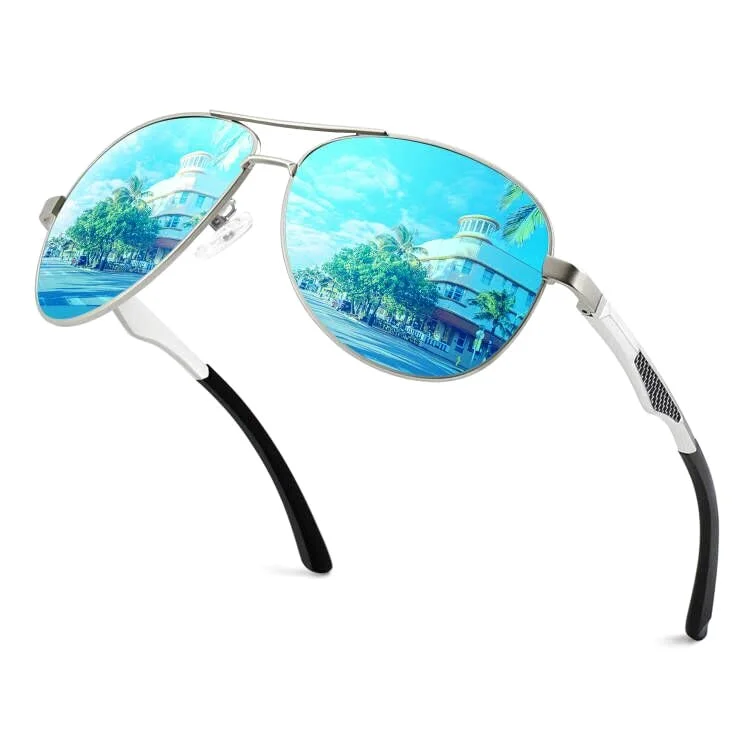
GQUEEN Classic Pilot Polarized Sunglasses MOS1
Polarized, UV400 · Lens 62 mm wide · Aluminium-magnesium alloy frame
$21.99
A correctly chosen bridge keeps the optical plane steady. If the frame slides, move the bridge number down. If it pins the nose, move the bridge number up. Adjustability in the nose pads buys flexibility with the rest of the fit.
Arms, hinges and temple length
Temple length is the third figure: the arm from the hinge to the tip. On most faces it matters less than lens width or bridge. The arm bends at the tip and the bend compensates for small differences. That is why a temple length that is a few millimetres off will often not feel wrong in day to day wear.
Spring hinges alter the equation. A spring hinge lets a metal frame open past straight. In plain language, the arms can flex wider than the neutral position so the frame will clear a wider face without forcing a tight fit. This feature changes how temple length translates to comfort. A frame with a spring hinge and a slightly shorter temple can still clear the ears cleanly.
Different materials behave differently at the ear. Metal arms with a polished finish and slim tips will present a narrower profile at the ear than a heavy plastic arm. Polycarbonate frames are lightweight and will feel less intrusive when worn for long periods. Note the weight figures where they appear in the product data. The GQUEEN 70s Square Pilot Polarized Sunglasses list 22 grams. The Retro Round Polarized Sunglasses list 21 grams. Lighter frames usually reduce pressure at the bridge and ears over time.
When you try a frame, sit and move your jaw, speak and nod. Arms that tug on the ears will reveal themselves in motion. If the arms feel too short, look for frames with longer temple figures or spring hinges that provide extra clearance.
Frame width, measuring your face and what Medium and Large mean
Frame width is the across-the-front measurement sometimes printed with the three numbers. Face width is the distance from temple to temple measured in a mirror. Use a ruler and measure the widest point from bone to bone, then hold that number next to the frame width figure. A frame designed to match a face width will sit without pushing at the temples or hanging off the sides.
Box sizes such as Small, Medium and Large describe the frame, not the face. Our Medium frames run around 140 millimetres across. Our Large frames run to 147 millimetres and beyond. Size labels give a broad starting point for scale but will not replace the three-number measurement on the pair you already like. Take both figures into account.
Some products in our range declare both frame width and size. The GQUEEN Classic Pilot MOS1 lists a frame width of 147 millimetres yet carries a Medium label on the box. The GQUEEN Oversized Clear-Lens Glasses list a frame width of 146 millimetres and the box says Large. Read the printed measurements first and use the box size as a quick reference. If a product says it runs large in the product data, treat that as a caution to compare with your baseline measurements rather than rely on the label alone.
Use the ruler in the mirror as a practical tool. A single number will help you narrow choices quickly. Keep the face measurement handy when you look at product figures so you can discard options that will be too wide or too narrow without a fitting.
| frame | lens width | bridge | temple | who it sits well on |
|---|---|---|---|---|
| GQUEEN Classic Pilot Polarized Sunglasses MOS1 | 62 | 20 | 140 | people who want a familiar medium fit with adjustability |
| GQUEEN 70s Square Pilot Polarized Sunglasses | 60 | 17 | 142 | those who prefer a slightly compact pilot shape |
| GQUEEN Round Steampunk Polarized Sunglasses MTS2 | 48 | 18 | 145 | a narrow face, or anyone who wants a small, contained lens |
| GQUEEN Nerd Plain-Frame Clear-Lens Glasses | 52 | 24 | 139 | anyone who wants a neutral frame that passes for glasses |
| GQUEEN Oversized Retro Square Clear-Lens Glasses | 69 | 21 | 140 | anyone who wants the widest lens in the range and a larger presence |
Shape after size: why a round lens and a pilot read differently
Size determines scale. Shape determines presence. A round lens, because of its circular geometry, occupies vertical and horizontal space differently from a squared or pilot lens. On a relatively narrow face a round lens can sit neatly within the visual field and feel proportional. On a broader face the same round lens can appear small and hesitant. The lens width you choose will either let the shape speak or keep it quiet.
Pilot shapes tend to cover more of the upper cheek and the bridge region. That coverage changes how they read in motion and how they interact with sunglasses functions such as blocking side light. Oversized shapes cover more of the face and therefore reduce the amount of stray light arriving from oblique angles. If you spend long periods in bright light, an optometrist would advise a wraparound or a frame that sits close to the face. For anything that could hit the eye, polycarbonate lenses are the recommended option.
Materials influence the perception of shape. Polished metal will read lighter, even in a large shape, because the metal provides visual breath. Thick polycarbonate in the same silhouette will appear bolder. The GQUEEN Retro Round Polarized Sunglasses are stainless steel with spring hinges and 21 grams. A buyer reported that the frame felt a touch large on a small face and that the spring-hinged arms pulled on the ears. That comment is useful when you are weighing scale against arm tension.
Do not expect the numbers to overturn the character of a shape. If you like the pilot profile, stay near the lens widths and bridges that make a pilot what it is. If you want oversized, accept that the presence will be greater and that the frame will cover more of the face.
What the numbers cannot settle and what to do about it
The three numbers are mechanical facts. They do not tell you how a frame will feel after four hours at the desk, after lunch, or during a walk. Comfort over time depends on weight distribution, the flexibility of the arms, the softness of nose pads, and sometimes simple temperament. Lighter frames reduce pressure. Frames with adjustable pads let you shift weight away from the nose. Frames with generous ear tips spread pressure and reduce local soreness.
Weight figures in the product data point to long-wear comfort where available. The GQUEEN Pilot Clear-Lens Glasses list 20 grams and a polished metal construction. The GQUEEN 70s Square Pilot lists 22 grams. Some people prefer lighter polycarbonate frames for all-day wear. Others tolerate a heavier metal if the weight is distributed by good pads and a well-placed bridge.
When fit becomes a matter of endurance, carry a rule of thumb: look for lighter materials and adjustability. If you take your glasses off at lunch, a light frame will make that break feel like a choice rather than a relief. If you work in bright conditions for long stretches, choose a close-sitting frame or wraparound form and polycarbonate lenses to follow professional guidance for side light and impact protection.
The numbers get you to the right neighbourhood. Wear, movement and personal comfort decide the house. Try with the three numbers in hand, pay attention to weight and adjustability, and give priority to the measures that match your day.
More of this sort of thing is in Lens Notes, and the people at GQUEEN keeps the whole range one click away on the front page.